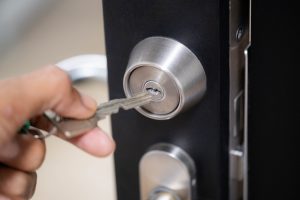
Maintaining a secure workspace starts with having reliable access for the right people. Consequently, many business owners realize that standard retail key cutting often fails to meet the high standards required for commercial locks. When our team at Your Key Maker assists local businesses, we emphasize that professional office key duplication is about precision and security protocol rather than just making a copy. Understanding the nuances of commercial hardware will help you manage your facility more effectively.
Choose High-Quality Blank Keys for Longevity
To begin with, the material of the key itself plays a massive role in how well it functions over time. Cheap aluminum or soft brass keys tend to wear down quickly or even snap inside the cylinder. Because office doors see much higher traffic than residential ones, our professional technicians recommend using heavy-duty nickel-silver or reinforced brass blanks. These materials resist bending and ensure that the teeth of the key maintain their sharp profile for years. Furthermore, using the correct blank prevents damage to the internal pins of your expensive commercial locks.
Understand the Risks of High-Security Keyways
While many standard keys can be copied at a kiosk, high-security systems are a different story. Many modern offices use restricted keyways to prevent unauthorized duplication. If your key is stamped with “Do Not Duplicate,” it is likely part of a controlled system. In these cases, only a certified locksmith can provide copies after verifying your authorization. This layer of protection ensures that a disgruntled employee or a temporary contractor cannot simply go to a hardware store and make a copy of your office master key. If you are dealing with broken components in these systems, you might need professional lock repair in Ottawa to ensure the cylinder still accepts authorized duplicates perfectly.
The Importance of Using the Original Key
One common mistake people make is copying a copy. Each time a key is duplicated, a tiny amount of physical information is lost. Eventually, the “copy of a copy” will be so far out of tolerance that it will stick or refuse to turn. To avoid this frustration, we always suggest keeping one “original” master key in a safe or a locked drawer. Use this original only for making new sets for staff. This practice guarantees that every new person receives a key that matches the factory specifications of the lock.
Regular Maintenance of Your Locking Systems
Even the most perfect key will struggle if the lock itself is neglected. Dust, grime, and temperature changes in the Canadian climate can cause internal parts to seize. Therefore, if you find yourself jiggling the key to get it to turn, the problem might not be the duplication quality. It is wise to have a locksmith in Ottawa inspect your hardware annually. Proper lubrication and alignment checks will make sure that your newly cut keys slide in smoothly every time. Taking care of your hardware now saves you from an expensive emergency lockout later.
Tracking and Managing Your Key Inventory
As your business grows, keeping track of who has which key becomes a significant challenge. We suggest implementing a digital or physical log to record every key duplication event. Mark each key with a unique identifier that does not reveal the room number for security reasons. For instance, use a code like “A1” or “B4” instead of “Server Room.” This system allows you to know exactly how many copies are in circulation. If a staff member leaves the company without returning their set, you will know immediately if you need to rekey the cylinders to maintain safety.
Why Professional Precision Matters for Businesses
Precision is the biggest difference between a hardware store machine and the equipment used by Your Key Maker. Commercial locks often have tighter tolerances than residential ones. A discrepancy of even a fraction of a millimetre can cause a key to catch. Professional machines are calibrated daily to ensure the depth and spacing of every cut are exact. This level of detail protects your hardware from premature wear and tear. When keys are cut accurately, they turn with a satisfying click, providing peace of mind that your office is locked tight.
Transitioning to Keyless Options
In addition to traditional keys, many offices are moving toward electronic access control. However, physical keys usually remain as a necessary backup. If you are managing a large facility, having a mix of high-quality duplicated keys and electronic fobs provides the best balance of convenience and security. Our team at Your Key Maker can help you decide which doors require restricted physical keys and which would benefit from a keypad or card reader.
Final Thoughts on Office Security
Ultimately, managing office keys is a core part of your business operations. By choosing high-quality materials, respecting restricted keyways, and maintaining your locks, you create a safer environment for your employees and your assets. Whenever you need help with your security infrastructure, remember that professional service is the best way to avoid mechanical failures. Your Key Maker remains dedicated to helping local businesses stay secure and accessible through expert craftsmanship.
Frequently Asked Questions
Can any key be duplicated at a self-service kiosk? No, many commercial keys and high-security restricted keys cannot be cut at a kiosk. These machines often lack the specific blanks or the high-precision software needed for complex office locks.
What should I do if my office key is stuck in the lock? Do not try to force it out with pliers, as this can break the key inside the cylinder. Instead, contact a professional to safely extract the key and check the lock for internal damage.
Is it illegal to copy a “Do Not Duplicate” key? While it is not a criminal law in all areas, most professional locksmiths will refuse to copy them without written authorization from the owner. This is a vital security protocol to protect business owners.
How long does it take to duplicate a set of office keys? For standard keys, the process usually takes only a few minutes per key. However, if you have a large order or high-security keys, it may take longer to ensure every cut is perfectly calibrated.
How often should I replace my office keys? You do not need to replace them on a schedule, but you should get new ones if the teeth look rounded or if the key feels thin. Worn keys are more likely to break or damage the lock.